


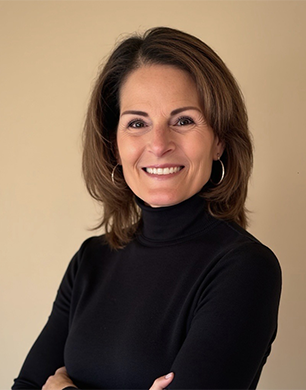
 Dr. Ellamarie Russo-DeMara is a HRT specialist and Medical Director with BetterU, a holistic mental wellness provider revolutionising and redefining mental healthcare.
She is a board-certified OB/GYN and a Menopause Society Certified Practitioner with a strong commitment to providing comprehensive, patient-centered care. With over 30 years of experience, her practice is deeply rooted in a holistic approach, ensuring that patients receive not only evidence-based medical treatment, but also the support and education they need to make informed decisions about their health. Having personally experienced early menopause as a result of chemotherapy for breast cancer, Dr. Russo-DeMara brings a unique level of empathy to her work. She understands firsthand how hormonal changes can impact a woman’s quality of life and is dedicated to providing up-to-date, compassionate, and individualized care that addresses both physical and emotional well-being.
She takes pride in her ability to truly listen to her patients, translate complex medical information into understandable terms, and empower women to take charge of their health. Above all, she genuinely loves caring for people and making a meaningful difference in their lives.
You’ve spent more than 30 years caring for women. What first drew you to OB/GYN, and what has kept you passionate about women’s health throughout your career?
I think I was drawn to women’s health even before I went to Med school. I was always the friend that was curious that researched things regarding women’s bodies even from a young age and then once I went into training as much as OB/ GYN was a difficult field for a woman who eventually wanted to have a family of her own, I still was drawn to caring for women. I resonated with women in a way that felt very comfortable and personal. OB/GYN was a unique field in which you could care for a woman from puberty right up through menopause. I enjoyed the highs and the lows of that but for the most part it was joyful and fulfilling.
What attracted you to Better U, and what does your role as an HRT specialist involve?
Better U has an approach to health care that I love in that it’s not just one facet of health. There’s so much intertwined in healthcare, especially when it comes to mental health and BetterU has embraced those components while bringing much needed treatment to the forefront. As a menopause specialist I have the privilege of guiding women at a very vulnerable time in their lives where there hasn’t been a lot of information. I find that the medications of course are helpful but understanding each woman’s needs as they go through this transition is important. I have been gifted with the ability to translate very complex information into relatable topics for women to be able to grasp what is happening in their lives and their bodies.
Better U offers care across areas including mental health, sexual health and longevity alongside hormone-related care. What appeals to you about looking at these aspects of wellbeing together rather than treating each symptom in isolation?
Throughout my career, I have always treated women and patients in general as a whole person, long before holistic was a catch phrase. There was not just one issue or one diagnosis or 1 symptom that I focused on. It was part of who I am and part of my osteopathic training to look at the full picture and it served me well. I feel that as a menopause practitioner it also serves me well because menopause is very complex and unique to each woman and you really need to listen to what they’re going through and try to understand what’s the best solution for their unique situation.
Women’s healthcare has changed enormously during your career. What do you think we understand about women’s bodies today that the medical profession underestimated—or simply got wrong—when you began your career?
Women’s healthcare has historically been treated as a “male biology” by default. Until the 1990s, women were largely left out of clinical drug trials with researchers even avoiding using female mice due to concern that changing hormones would make the results “messy”. Today because of mandated inclusion, agencies such as the NIH now require females and female animals in their clinical drug trials. Overall, there’s a greater awareness of sex differences in various illnesses such as how heart disease and pain affect women differently.
Your own experience of breast cancer treatment led to early menopause. How did becoming a patient yourself change the way you practise medicine and communicate with women?
The doctor as the patient and being able to walk in a patient’s shoes was an invaluable experience and further enhanced my ability to empathize. Having had breast cancer surgery, chemotherapy and radiation definitely humbled me even more which as a physician which is an important quality. You really need to be present and understand what somebody else is going through. Having gone through an early and abrupt” chemical” menopause, I was very fortunate to have an oncology team at Dartmouth that understood the aspects of what I was going through and were knowledgeable about alternative treatments outside of hormone therapy. Overall, my experience reinforced and validated what I was already doing as a gynecologist in recommending alternatives for women who couldn’t safely take hormone therapy. I was able to communicate how the alternatives worked for me and advise and reassure them that yes, these other alternatives can truly help during this menopause transition
You stress the importance of really listening to patients. What are women telling you in the consultation room that you think the wider healthcare conversation still isn’t hearing?
Yes, I can’t stress this enough. I learned way back as a baby medical student that listening is probably the most important diagnostic tool we have as physicians. A patient will tell you what’s wrong, you just need to listen to them. As a menopause practitioner it can’t be stressed enough that women have not been heard so when I am in consultation with each woman, I feel that listening to what they’re going through and validating what they’re going through is so important because every woman’s journey is unique.
What are the menopause symptoms women are most likely to dismiss as “just getting older” when they could benefit from seeking medical advice?
I have to say that I don’t like to hear that ‘just getting older’ quote. Women need to be made aware of alternatives and treatments to address many issues that were ignored in the past. Women today are more in tune with their bodies. They know what they need to do and are more health conscious in terms of diet and exercise.
If I had to choose one menopause issue, I’d like more women to have information on preserving vaginal and urinary health. I’m a big advocate of preventative health and there’s an aspect of menopause such as vaginal health that can’t be overlooked. Women need to know that vaginal dryness, pain with sex and urinary frequency, UTI’s and incontinence are not something that has to be accepted. Vaginal estrogen is a local (not systemic) hormone therapy and is even safe for breast cancer survivors.
Women in midlife are often simultaneously dealing with careers, children, ageing parents, relationships and hormonal change. How much can stress amplify symptoms—and how do you distinguish between hormonal, psychological and lifestyle factors?
Women are juggling a tremendous amount throughout their lives. We accept that this is what we need to do. I absolutely think that stress plays a major role in all health care issues and especially in menopause. I’ve often counselled women who will come to me in the perimenopause thinking that they’re having a mental breakdown. Suddenly they cannot manage the issues they’ve always dealt with as multitaskers. Perimenopause hits you and suddenly you lose the reserve you’ve always had to deal with everything in your life. You’re now struggling physically due to hot flashes, joint pain, brain fog and not sleeping all while trying to do what you have always done efficiently in the past. As a menopause specialist, I reassure, guide, validate and educate my patients as to what is happening while treating their symptoms so they can live their life.
What is one piece of health advice you wish every woman knew by the time she reached 40?
It’s all about preventative health. Prioritize regular health screenings and be aware that perimenopause is happening or on the horizon so ask the questions and gather the information so you are prepared
What is one menopause myth you would happily never hear again?
That this is just a short period of time in your life and it’ll be over soon. Unfortunately, some women struggle over 10 years with perimenopause symptoms which are the most difficult because of the fluctuation in hormones and mood changes.
Finally, after three decades of looking after women—and navigating major health changes yourself—has your definition of feeling well changed?
Absolutely! Feeling well today is so different from my mother’s generation. Feeling well is being able to do all the things you want to do and continue that throughout life. I don’t think it’s enough to just feel well, I think you have to have emotional, spiritual and physical wellbeing to really be well and that’s how I like to live my life.
For more information visit www.betterucare.com