


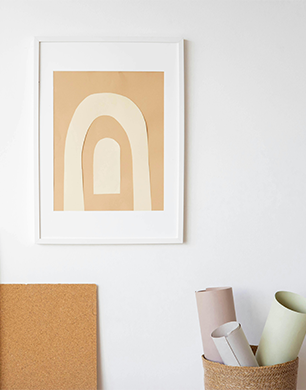
Photo Credit: Artem Podrez via www.pexels.com
There’s a beautiful tension at the heart of interior design; it’s the intricate dance between displaying and decorating. There’s a whisper-thin boundary between the two, where personal expression and aesthetic restraint meet, where the home becomes a gallery and a refuge. The tricky bit? Cross that boundary, and you’ve got visual clutter; your immaculate styling slips into sterility.
In an era of open shelving, gallery walls and Instagram “shelfies,” the act of displaying has become its own art form. But for every perfectly balanced mantelpiece, there’s a risk of tipping into chaos. The most successful interiors understand that the secret lies in allowing displaying or decorating to converse gracefully.
Displaying: The Art of Personal Storytelling
Displaying is more personal. It’s how we tell stories without words. Every object, from a flea-market trinket to a family heirloom, becomes a line in the poetry of our space. A designer’s role, then, is not simply to arrange but to translate: to give those objects a stage without letting them steal the show.
The rise of the “curated clutter” aesthetic reflects our craving for individuality. We’re no longer content with perfect minimalism; we want our homes to reveal something intimate, to feel lived-in yet intentional. So, designers often begin by reading the personality of the homeowner through the things they cherish most.
But here’s where many fall short: too much storytelling and the narrative becomes noisy. When every shelf screams for attention, even the most beautiful objects lose their power. That’s why professionals talk about “visual rhythm”, or the choreography of how the eye moves through a space. It’s about varying scale, playing with negative space, and giving objects breathing room. A simple framed photograph can sing louder than a dozen competing trinkets, if it’s given the right setting (and yes, a quality picture frame makes all the difference).
Decorating: The Discipline of Design
If displaying is storytelling, then decorating is structure, the grammar and punctuation of interiors. It’s where the logic of proportion, scale and texture enters the scene. Designers think in terms of flow, of how one element complements another, and how every choice contributes to an overall mood.
There’s an undeniable discipline in good decorating. It’s not about simply adding; it’s about composing. Every cushion, vase and light fitting plays a part in a carefully orchestrated whole. The challenge is to maintain that sense of intention without ironing out all the personality.
Restraint becomes the unsung hero. Knowing when to stop, when to let a piece speak instead of shouting over it. It separates the amateurs from the masters. Decorating, at its best, feels like a conversation between order and intuition. You edit, you refine, and you leave just enough imperfection for soul to creep in.
When Display Takes Over
We’ve all seen it: the collector’s corner that’s turned into a museum gift shop, or the coffee table so layered it could double as an archaeological dig. Displaying too much is a common misstep, even among the stylishly inclined.
The problem isn’t in the passion, it’s in the pacing. Every object might hold sentimental value, but not every object deserves constant display. Designers often recommend rotating collections throughout the year, much like curators do in galleries. This approach keeps the home visually fresh while allowing special pieces to shine.
There’s also the concept of visual zoning. This means grouping collections within defined areas rather than scattering them across every surface. By creating intentional pockets of display, you give the eye moments of rest. It’s a design principle rooted in psychology as much as aesthetics: humans respond best to rhythm, contrast and pause.
When Decorating Becomes Too Controlled
Of course, the opposite danger is decorating so precisely that a room loses all pulse. Perfection, while beautiful in a showroom, can feel oddly lifeless in a home.
Overly coordinated interiors, where every cushion matches, every object is aligned, risk stripping away warmth and spontaneity. The best designers know to break their own rules just enough. A weathered vase in an otherwise sleek space. A mismatched frame among an otherwise symmetrical gallery wall. These gestures of imperfection invite intimacy; they tell us someone actually lives here.
This is where displaying and decorating begin to blur. The magic happens in that tiny rebellion, when something a little off feels entirely right.
The Sweet Spot Is Curated Imperfection
Finding balance is a process, not a formula. The most captivating homes feel both edited and expressive, curated but not contrived. This is what we might call curated imperfection or the art of placing with intent while leaving room for accident and discovery.
Professionally, this means thinking in layers. Designers often start with the architectural framework, colour palette, materials, and lighting, before weaving in personal elements. A neutral backdrop gives emotional pieces more impact. Texture, meanwhile, creates depth: the soft grain of timber against polished brass, a linen lampshade beside a vintage ceramic.
Visual hierarchy is key. Not every item should fight for focus. By arranging objects with varying heights and tones, and by leaving deliberate pockets of space, you allow the eye to rest and the story to unfold naturally. A single framed print, especially when surrounded by high-quality picture frames that complement its tone, can anchor a whole wall with quiet confidence.
The Poetry of Placement
Interiors are living things. They evolve as we do. Shifting, softening, collecting layers of story. The fine line between displaying and decorating isn’t a rule to follow but a sensitivity to develop.
When done well, your space becomes both a mirror and a canvas: a reflection of who you are and a composition of how you want to feel. The goal isn’t perfection or excess, but balance and achieving the subtle dance of beauty and belonging.
After all, the art of living beautifully lies somewhere between the gallery wall and the heart.