


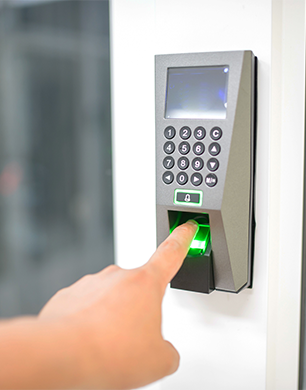
Photo Credit: panumas nikhomkhai via www.pexels.com
Security plays a complex role in law enforcement. Simply put, it is one of the principal overarching functions of law enforcement itself, and to a certain extent, informs pretty much everything.
However, the way that security is integrated into law enforcement processes and departments is highly complex, and that complexity is only increasing in the face of changing regulatory frameworks and rapidly evolving technologies.
From context specificity to going right back to basics, here’s how law enforcement can choose the right security systems in 2026.
Context specific
While there are obviously a range of regulations and laws that govern law enforcement security across the country, it’s important to make sure that the systems you adopt are context-specific.
You start these processes off with an in-depth analysis of the actual security risks that are faced by your department, rather than assuming that you’ll just be facing the same threats that appear in statistical averages across the nation.
Once you understand the threats you need to deal with, you can start to choose technologies and solutions that can be adapted to deal with those specific threats.
Integrated systems
Law enforcement has historically been famous for its reliance on legacy systems. As new technologies are layered on top of those which are far older and often less technologically advanced, the number of detached ecosystems which cannot be integrated begins to grow.
While updating these systems is obviously easier said than done, and can in some cases take years to complete, if you are already replacing a security system, it’s important to choose one that can be integrated into your existing security architecture.
Consider total operating costs
Budget constraints remain an important factor to be navigated, and it’s important that you’re able to factor in long-term operating costs of any security systems when determining their affordability.
Calculating the total cost of implementation can be difficult, but it’s crucially important, to make sure that you don’t inadvertently invest in a cash sink.
Smart, simple technologies
Often, it’s the simplest, most common technologies that have the biggest impact on security. Whether that’s in key management or cell security, it’s important to return to these basics and update them if necessary, without adding unnecessary or even potentially detrimental complexity.
For example, that might consist of investing in a key control cabinet from somewhere like Traka. These cabinets can be used to control access to gun lockers, cars, or even cells, with personalized access codes ensuring that you always know exactly who accessed a given key, and when.
Security in law enforcement isn’t an area where you should cut corners to save an easy buck or two, and it needs to be approached in a strategically informed manner.
By starting with an analysis of the actual threats faced by your organisation, and then choosing solutions that can be integrated into your existing ecosystems, you should be able to choose the right systems for your needs, while keeping costs down and operational efficiency high.