


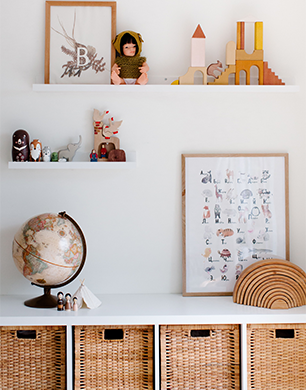
Photo Credit: Tatiana Syrikova via www.pexels.com
Playrooms have a reputation. They’re the room where good intentions go to die, where primary colours collide and where one stray piece of plastic can undo an afternoon of tidying. They don’t have to be that way.
A well-styled playroom can look calm, feel inviting and still be completely practical. The trick is to design it around how children actually play, not around how a catalogue photograph would like them to.
Start with zones
Before you buy anything, think about what the room needs to do. Most children’s spaces work best divided into a few simple zones: a building and floor play area, a creative corner with a table, a quiet nook for books and a spot for imaginative play, where a collection of kids dolls and their furniture can live.
Marking these out with rugs, shelves or a change in colour helps children know where things belong. It also helps with tidying, because each zone has its own set of toys and its own storage.
Choose a calm backdrop
Toys supply plenty of colour on their own, so the room itself works best when it’s quiet. Soft whites, warm neutrals or muted tones let the toys be the focus without overwhelming the eye. One or two accent colours, repeated across cushions, baskets and prints, are usually enough to tie things together.
Washable paint is worth the extra cost. So is a hard-wearing floor or a good rug, because both will be asked to put up with a lot.
Make storage part of the design
The difference between a stylish playroom and a chaotic one is almost always storage. Open shelves at child height let toys be seen and chosen independently, and baskets, bins and boxes hide the clutter that shelves can’t contain.
Choose storage that’s easy to use. Lids that are hard to open and drawers that stick won’t be used, and a toy that can’t be put away easily won’t be. Low, wide baskets work well for younger children, since tidying can be as simple as tipping things in.
Labels help, particularly picture labels for children who can’t yet read. They turn tidying into a sorting game and make it clear where everything lives.
Display, don’t just store
Some toys earn a place on show. A favourite set of dolls, arranged on a shelf or in a basket, looks like part of the decor rather than part of the mess. It also tells your child that their toys are valued, and makes it easy to choose them.
Rotate what’s on display. A shelf with a handful of well-chosen items looks better than one crammed full, and children tend to play with what they can see. Changing it every few weeks keeps things fresh and gives you an excuse to swap in something seasonal.
Make room for imaginative play
A dedicated spot for pretend play pays off. It might be a play kitchen in a corner, a small table with chairs, or a low shelf set up as a shop. A doll set with furniture and accessories can live on a shelf or a tray, ready to be picked up and played with, and its pieces look surprisingly charming when arranged together.
A tray or a low table gives a play scene a defined edge, which helps it stay in one place and means it can be left up overnight rather than cleared away at bedtime.
Think about the walls
Walls are a good place to put things you don’t have floor space for. A shelf at adult height holds treasured items that need to be out of reach, and a picture rail lets you display children’s artwork without a nail in the plaster.
A large pinboard or a row of clips gives drawings and paintings a home and lets you swap them regularly. Framing a few favourites makes the room feel considered, and children love seeing their work on show.
Add comfort
A playroom needs somewhere to sit. A beanbag, a pile of floor cushions or a small sofa gives children somewhere to read and gives you somewhere to join them. A soft rug makes floor play comfortable, and a throw adds warmth.
Think about light too. Good natural light makes the room feel inviting, and a few lamps create a softer glow in the evening. Avoid anything a child could pull over.
Keep furniture flexible
Children’s needs change quickly, and furniture that can adapt will last longer. A table that adjusts in height, shelving that can be rearranged and storage that works for toys now and books later will all earn their keep over the years.
Choose pieces that aren’t too childish if you can. A plain wooden table and chairs look right at three and still work at ten.
Edit regularly
The most effective styling tip is also the simplest: own fewer things. A playroom with half the toys is easier to keep tidy, easier to play in and much easier to make look good. Every few months, sort through, and pass on anything outgrown or unloved.
It also helps to keep a box for the toys that are resting. Bring them back after a break, and they’ll feel new.
Make it a habit
A playroom stays presentable when tidying is part of the routine. A five-minute reset before tea, with everything going back to its home, is far easier than a big sort at the weekend. Make it a game, put some music on, and children often join in without being asked.
A good playroom isn’t the one that looks perfect. It’s the one that’s easy to keep nearly tidy, comfortable to be in and full of things that actually get played with. Style it with that in mind and the rest follows.