


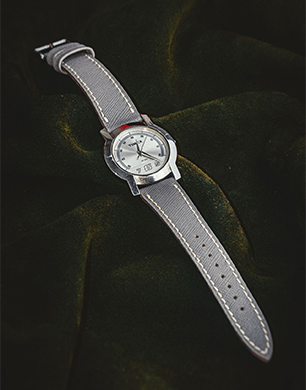
 Field watches were created as practical instruments, but their appeal is no longer limited to hiking routes, military history or weekends in the countryside. Simple dials, clear numerals and modest cases suit the way many people now dress for ordinary work and leisure. The result is a watch style that feels at home with an overshirt in Manchester, a raincoat in Edinburgh or a relaxed office outfit in London.
The strap plays a large part in that change. Put a field watch on polished leather and it becomes smarter. Fit woven nylon or canvas and its practical origins come forward. That flexibility explains why people who do not consider themselves collectors are adding field-watch details to everyday clothing.
Practical design fits modern wardrobes
The clearest field watches avoid unnecessary decoration. They were designed for quick reading, so their dials tend to work well with clothes that also value function, including chore jackets, denim, knitwear and sturdy footwear. This makes the style easier to wear than highly polished dress watches or very large sports models.
Brands such as Hamilton, Seiko and Tudor have helped keep field and military-influenced watches visible across different price levels. The exact history and construction differ between models, but the broad idea remains useful: a legible watch with a case that does not need to dominate the wrist.
The strap controls how military the watch feels
Colour, weave and construction can shift a field watch towards heritage clothing or a cleaner contemporary outfit. Khaki and olive reinforce the traditional outdoor association. Black, charcoal or navy can make the same watch easier to wear in an office. Striped designs introduce more colour and can work well with casual weekend clothes.
A Fabric watch strap is particularly relevant because it keeps the watch light and changes its character without replacing the case. Watch Obsession carries fabric options in nylon, canvas and Cordura from brands including Erika’s Originals, Hirsch, Morellato, RIOS1931, OMEGA and its own range. The retailer also lists plain, striped and patterned styles across a broad selection of lug widths.
Nylon and canvas do different jobs
The words fabric, textile and cloth are sometimes used broadly, but construction makes a visible difference. Nylon straps can be smooth, ribbed, striped or elastic. Many are slim enough to sit close to the wrist and suit watches with practical proportions. One-piece versions pass beneath the case, while traditional two-piece versions attach separately to each side.
Canvas usually has a more noticeable woven texture and a thicker, more structured feel. It works well with watches that have brushed cases, cream numerals or vintage-style dials. The material can also echo the surface of cotton jackets and heavier shirts without trying to match them exactly.
Cordura provides another woven option. Some designs are made with water resistance in mind, although shoppers should check the information for the individual strap rather than assuming every fabric construction can be soaked. The water resistance of the watch itself also remains a separate question.
Field style can work at the office
Many British workplaces now sit between formal tailoring and very casual clothing. A field watch fits that middle ground. With a dark fabric strap, it can work alongside chinos, an Oxford shirt and an unstructured jacket. On brown leather, the same watch may look suitable with a suit in an office where the dress code is not strict.
The key is restraint. A heavily striped strap, oversized case and multiple outdoor accessories can make the reference too literal. If the watch already has large numerals and a strong dial, a plain charcoal or navy weave may be enough. If the dial is simple, a subtle stripe can add interest.
Fabric also changes the physical experience of wearing a watch through the day. It is often lighter than a steel bracelet and less formal than polished leather. Length still matters, especially with one-piece designs that leave extra material to fold back through the keepers. Anyone with a smaller wrist should check the full measurements rather than relying only on the lug width.
Check the fitting before changing the look
Most field watches with conventional lugs and spring bars accept a wide choice of straps, but there are exceptions. Some modern watches use curved ends or model-specific fittings. The strap width must match the space between the lugs, and the spring bar must seat securely in both holes.
Quick-release bars can make changes easier, especially when the same watch moves between leather during the working week and fabric at the weekend. A standard bar normally requires a spring-bar tool. The case should be protected during removal, and professional help is sensible if access is tight.
Field-watch styling works because it is adaptable rather than theatrical. The watch can retain its practical identity without making the wearer look ready for an expedition. Choosing the right weave, colour and construction lets the same clear dial sit naturally with the clothes people actually wear across the UK.