


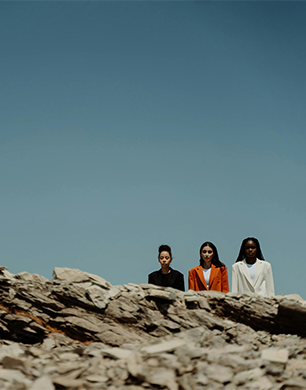
cottonbro studio via www.pexels.com
Walk through any city today, and you’ll spot it: a teen in Lagos wearing the same trainers as a student in Berlin, a barber in London with a jacket that mirrors one from the streets of Tokyo, a hip-hop artist in New York with a ring or chain that looks like it came straight from a street market in Southeast Asia.
This is the impact of globalisation.
Fashion has become borderless. Styles travel fast. Platforms like Instagram, TikTok, and YouTube challenge the very notion of physical geography. What’s trending in one place becomes accessible in another within hours. At first glance, that sounds exciting.
More access. More creativity. More choice. But behind all of that is a different story. One about power, influence, and what gets lost when local fashion is pulled into a global rhythm that rarely slows down.
When Fashion Evolves Beyond Borders
For a long time, men’s style was shaped by context. What you wore came from what you needed. A coat was made for your weather. A pattern reflected your culture. Jewellery said something about your community, upbringing, and hierarchical position.
Now, style comes from somewhere else, not from the ground, but from the feed. Algorithms pick what you see. Fast fashion brands remake the look in record time. Online stores ship it anywhere.
That shift flattens everything. A design rooted in tradition gets repackaged and sold without credit. A pattern tied to a specific region becomes just another trend. A style that once had weight becomes empty once stripped of its origin.
Drowning Local Talent
There’s nothing wrong with influence. For millennia, fashion has continuously evolved through exchange. Cultures talk to each other. They always have. But when global fashion becomes a one-way conversation, the damage starts.
Small brands get pushed aside by international chains. Handmade garments compete with mass-produced ones at half the price. Young designers trying to express their origins are told to follow trends to survive.
The Menswear Perspective
Men’s fashion has opened up in recent years. There are more options and room for expression, and buying a look that feels current is easier than ever. However, it’s harder to find something that feels authentic.
Take a 5mm Cuban chain. It’s a popular size, easy to wear, and fits almost any outfit. But there’s a difference between picking one from a fast-fashion retailer and finding one made with real craft. The first might look suitable for a few wears, but the second stands the test of time.
That’s the difference globalisation makes. It speeds up access, but it also strips away meaning. We’re left with the image of style, not the substance.
It Works Both Ways
Still, globalisation doesn’t only flow in one direction. While many dominant trends come from the same handful of cities, designers across the Global South, Eastern Europe, and Southeast Asia are starting to turn the lens back.
They’re not copying or replicating. They draw from local fabrics, tailoring traditions, and cultural styles to shape clothes that feel like home, even when worn abroad.
In Nigeria, the revival of traditional menswear is mixing with contemporary styles. In Mexico, concho belts and jackets are being reinterpreted for new audiences. In South Korea, there’s an artistic union between minimalism and heritage-inspired detail. None of this needs outside approval.
Practical Ways to Stay Grounded
Globalisation can’t be undone, but it can be questioned and shaped. Here’s how to stay conscious when building your wardrobe.
Start local when you can.
Support designers in your city or country. Even if the price is higher, the value is often greater. You get better materials. Better ethics. A more apparent connection to the work.
Learn before you buy.
If something is based on a cultural design or material, find out where it’s from. If a company doesn’t say who made it or how, ask why.
Wear what matters.
Not every piece has to be a statement, but every piece should feel like you. Build around staples that last. Keep your core strong. Get a good coat. Get a shirt that fits right.
Slow down.
Trends are designed to make you feel behind. You’re not. Style is not about keeping up. It’s about knowing what works for you and not needing to prove it.
Beyond the Cycle of Global Trends
The beauty of fashion is that it moves. But not everything that moves brings progress. Sometimes, it erases, overwhelms, and sometimes tells people that what they’ve always worn isn’t good enough.
The challenge now is to find balance, to take what globalisation offers without letting it drown out the details that matter because those details are where style begins…
Not in the trend but in the decision to wear something that means something.