


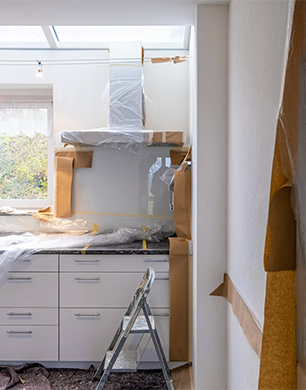
Photo Credit:
immo RENOVATION via www.pexels.com
The average London home now sells for £554,000, down from £567,000 a year earlier, according to the Office for National Statistics. With prices easing, every upgrade has to earn its place. A new kitchen or an extra bedroom can lift what buyers will pay, yet some projects cost more than they return. This guide explains what a valuation measures, shows current prices across four London areas and ranks common projects by the value they add. Read on for the local figures, the checklist and the smaller style choices that help a home stand out before it goes on the market, whatever your budget.
Key Takeaways
- The average London price is £554,000, falling from £567,000.
- Loft or extension gains can reach 24% on a three bedroom house.
- Ten per cent more floor space adds roughly five per cent.
- An in-person visit gives a sharper figure than an online estimate.
- Value your home before you spend, then compare costs with returns.
What a London Valuation Actually Measures
A valuation estimates what a buyer would pay today. It rests on three things: the condition of the home, recent sales of similar properties and the direction of the local market.
Before you spend on upgrades, a Property valuation in London shows what the market would pay for the home as it stands, so you can judge which projects deserve a budget.
Oliver Jaques offers two routes. An agent visits in person, assesses the property against current market trends and explains what the agency could achieve. An instant online tool gives an approximate, algorithm-based figure that works as a ballpark.
The agency works from 229/231 Lower Road, Surrey Quays, London SE16 2LW and from Unit A Arlington Building, The Bow Quarter, London E3 2UB. Its areas include Bermondsey, Canada Water, Deptford, Greenwich, Lewisham, Hackney Wick and Stratford.
| Route | How it works | Suits |
|---|---|---|
| Instant online | Algorithm-based, approximate figure | A quick ballpark |
| In-person visit | Agent assesses condition against current trends | Sale planning and upgrade decisions |
Condition matters because buyers price in the work they must do. A home that needs a new kitchen is compared with similar homes that already have one, and the gap shows up in the figure.
| Tip: Treat an online figure as a starting point. A visit can account for light, layout and finish, which an algorithm cannot see. |
What London Prices Look Like Right Now
Prices have eased across the capital, though not evenly. Average prices in Tower Hamlets fell 13.3% in a year, while Southwark and Lewisham slipped by about two per cent. The ONS local data shows the pattern.
ONS figures; house prices are provisional estimates for August 2026.
| Area | Average price | Price change | Average rent | Rent change |
|---|---|---|---|---|
| Southwark | £569,000 | Down 2.1% | £2,516 | Up 7.3% |
| Lewisham | £486,000 | Down 1.6% | £1,832 | Up 2.1% |
| Tower Hamlets | £448,000 | Down 13.3% | £2,462 | Up 3.8% |
| London | £554,000 | From £567,000 | £2,338 | Up 3.5% |
Rents tell a different story. Southwark rents rose 7.3% to £2,516 a month, which supports landlords even while prices soften. Rental valuations measure rent rather than sale price, so owners who plan to let can request one as well.
Gross yields, calculated by dividing a year of rent by the average price, vary widely across these areas:
- Tower Hamlets: about 6.6%, helped by the fall in prices.
- Southwark: about 5.3%, just above London’s 5.1%.
- Lewisham: about 4.5%, the lowest of the four.
A homeowner weighing a sale against a let can use those yields as a rough guide, then request a valuation for each route.
Prices slipped across London while rents kept rising.
Why Timing Matters in a Softer Market
When prices fall, buyers compare homes closely and pay for finish. The gaps to the London average show how much room each area has:
- Southwark: £15,000 above the London average.
- Lewisham: £68,000 below it.
- Tower Hamlets: £106,000 below it.
These gaps are calculated from the ONS averages above. They explain why a valuation tied to your own street gives a better guide than a borough headline.
Which Upgrades Move the Number
Nationwide’s house price research measured what common projects add. The headline figure is a loft conversion or extension, which it says can add as much as 24% to a three bedroom, one bathroom house.
Nationwide figures, October 2025.
The study correlated prices paid with property type, bedrooms, bathrooms, floor area and location. It used house price data from October 2024 to September 2025.
- Scenario size: the extension case assumes an extra 28 square metres.
- Bedrooms: each added bedroom is assumed to be 13 square metres.
- Floor space: a 10% increase adds about 5% to a typical price.
For a sense of scale, five per cent of the Lewisham average of £486,000 is £24,300. That illustrative sum shows what a modest gain in floor area might add before building costs.
Gains vary by property type. Adding a double bedroom to a two bedroom house lifts value by 13%, and a detached home moving from two to three bedrooms gains 17%. Moving from three to four bedrooms adds 13% to a detached home and 10% to a semi or terrace.
Energy efficiency and added living space feature in StyleNest’s advice as well, so a loft or extension can pair well with better insulation.
Those percentages come from national data, so a London valuation helps you test them against your own street before committing to building costs.
Smaller Upgrades With Style Appeal
Not every owner can add a storey. StyleNest’s guide to home improvement and value points to added living space, better energy efficiency, refreshed kitchens and bathrooms, and stronger kerb appeal. It favours practical projects over passing trends.
Smaller changes that photograph well include:
- Window dressing: this advice on roller blinds covers light, glare and privacy.
- Storage: a combi boiler can free cupboard and loft space, as this piece on a combi boiler explains.
- Finishes: repaint tired walls and refresh grout before photographs.
A combi boiler suits some homes better than others. The same article advises a Gas Safe engineer to assess mains pressure and hot water demand first.
Kerb appeal deserves a mention too. A tidy entrance, clean windows and neat planters shape the first photograph, and that image decides whether a buyer books a viewing.
| Note: Keep receipts and certificates for every job. Buyers and valuers respond well to documented work. |
A Checklist Before You Book a Valuation
Prepare these six items so the visit gives you a useful figure.
- Gather paperwork. Collect EPC details, guarantees and building regulation records.
- Tidy and declutter. Clear surfaces so rooms look larger.
- List the work. Note each upgrade, its date and its cost.
- Check local sales. Look at similar homes sold on your street.
- Pick the type. Choose sales, rental, or both when you request a visit.
- Ask about the basis. Find out which comparable sales the figure rests on.
Sequence matters. Book the first visit before you hire builders, so the figure reflects the property in its current state. A second visit after the work shows what the money achieved, and the difference tells you whether the project paid its way.
This short video shows what to expect when an agent arrives:
| Tip: Take your list of improvements to the appointment. Dated records help the agent explain the figure. |
Answers for Homeowners
What does a property valuation involve?
An agent inspects the home, notes its condition and compares it with recent local sales and current market trends. The result is an informed opinion of the price a buyer would accept, not a guarantee.
How accurate is an online valuation?
Online tools use an algorithm to produce an approximate figure. That suits a first ballpark, but it cannot see condition, layout or recent upgrades the way a visiting agent can.
Do extensions always add value?
No. Nationwide found gains of up to 24% for lofts and extensions, yet the amount depends on bedrooms, bathrooms and location. A 10% rise in floor space typically adds about 5%.
Which areas does Oliver Jaques cover?
The agency covers Surrey Quays, Bow, Canada Water, Bermondsey, Deptford, Rotherhithe, New Cross, Canary Wharf, Lewisham, Southwark, Greenwich, Peckham and Stratford, among other east and south east London areas.
How can homeowners request a valuation?
Owners can book through the online form, choosing sales, rental or both. It asks for the address and postcode, plus a name, email and contact number.
Final Thoughts
London prices are drifting lower while rents keep climbing, so owners need evidence rather than guesses. Lofts and extensions offer the largest gains, floor space adds steady value, and tidy finishes help every home show well.
Owners who plan ahead also gain flexibility. A reliable figure helps you decide whether to sell, let or stay, and it frames conversations with lenders, builders and family. Numbers calm the decision, whichever route you choose.
Start with a clear starting figure, then weigh each project against what it adds. Keep records of the work, compare local sales and let the numbers guide the budget. That approach protects both your home and your plans.
References
- Nationwide Building Society, Loft it up: attic bedrooms can boost the price of a home by a quarter (House Price Index special report, October 2025): https://www.nationwide.co.uk/media/hpi/reports/xxx
- Office for National Statistics, Housing prices and private rents in Southwark, September 2026 rents: https://ons.gov.uk/visualisations/housingpriceslocal/E09000028/
- Office for National Statistics, Housing prices and private rents in Lewisham: https://ons.gov.uk/visualisations/housingpriceslocal/E09000023/
- Office for National Statistics, Housing prices and private rents in Tower Hamlets: https://ons.gov.uk/visualisations/housingpriceslocal/E09000030/
Fact Check: All statistics and data points in this article were verified against original sources as of 11 November 2026. Sources are listed in the References section.