


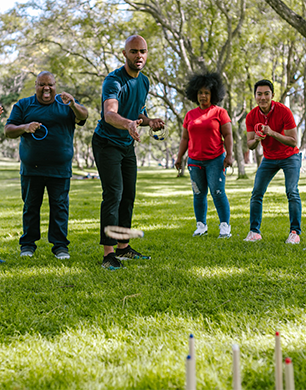
Photo Credit: RDNE Stock project via www.pexels.com
If you’re planning to host some kind of team building activity in 2027, you need to be aware of the trends reshaping the way such events are organised and run.
Hybrid and distributed teams will continue to be commonplace, budgets for away days will stay squeezed (making ROI all-important), and all employees will expect to be included.
So far, so 2026.
But the shift to more experiential activities will really ramp up in 2027, transforming the way team-based activities are conducted.
At the same time, shorter timeframes and purposeful, goal-focused activities will be the order of the day as organisations look to get the most bang for their team building buck.
Below, we take a closer look at what you can expect team building to look like in 2027.
Experiential not passive
Gone are the days of passive team building activities, trust falls, and staid talking-head seminars that take up the whole day.
In 2027, team building will shift decidedly to more inclusive and experiential activities for both in-person and remote workers.
With that in mind, in 2027, look for experiential activities that feature:
- Challenge-based events: Problem-solving tasks, game simulations, and escape rooms.
- Social-conscience activities: Community-led projects are big at the moment, and sustainability initiatives especially so.
- Creative challenges: Arts and crafts, and innovation workshops, especially those featuring a good dose of nostalgia, such as the sessions featuring LEGO bricks hosted by Bricks McGee, are very popular.
- Fully immersive experiences: Outdoor experiences, cultural trips and interactive events.
Brief encounters
Participants are responding to more microdosing of team building activities, with all-day sessions increasingly giving way to shorter, more impactful sessions.
With time at a premium and attention spans shorter than they used to be, more compact, impactful experiences can drive real results and keep budgets down.
That means that bite-sized, one-hour workshops, games, or social sessions are increasingly being used so they fit in around busy workers’ schedules.
Asynchronous formats
Given the nature of work nowadays, with more and more of us working remotely or in some hybrid arrangement, team building will continue to shift away from in-person, real-time sessions to more remote-based, asynchronous events.
That means set meeting times and strict deadlines are becoming a thing of the past; instead, participants are carrying out activities at their leisure.
Some examples of asynchronous team building tasks to look out for in 2027 are:
- Worker recognition boards: Colleagues post appreciative remarks, feedback, and shout-outs to co-workers.
- Collaborative games: Teams are given scavenger hunts, puzzles, and creative challenges to do, all in their own time.
- Shared projects: Group activities such as playlists, storyboarding, and idea boards.
- Online sessions: Using online collaboration tools like Teams, Slack, or Google Workspace, team building talks and sessions can be held online.
Inclusivity
The number one question for anyone in 2027 running a team building event will be: ‘Does everyone feel they can participate, feel they belong to the group, and add value?’
To answer this question in the affirmative, team building in 2027 will:
-
- Include all work members, not just the loud and most competitive ones.
- Promote psychological safety so people feel comfortable contributing ideas and speaking up during sessions.
- Respect individual differences, especially when it comes to different cultures, backgrounds, and individual talents.
- Support different ways of working, especially if workers are in different time zones or locations.
- Include members with special needs, such as people who use mobility devices or have special religious or dietary requirements.
Conclusion
2027 is likely to be the year team building finally comes to terms with the way in which people work nowadays.
That means a focus more on team building activities that bring value and drive results via experiential sessions.
At the same time, shorter, more purposeful events will displace longer sessions, helping teams build connections during even the busiest periods.