


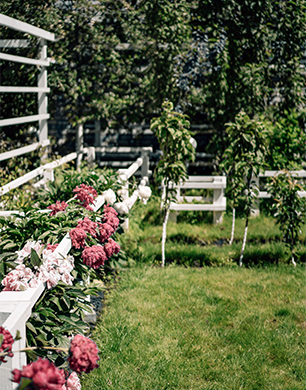
Photo Credit: Mikhail Nilov via www.pexels.com
Your garden is one of the largest spaces in your home. It gets used every day, it affects how your property looks from the street, and when it is done well, it genuinely changes how you feel about where you live. So when the time comes to invest in a proper transformation, the choice of who does the work matters enormously.
The problem is that landscaping is an unregulated industry. Anyone can set up as a landscaper. Anyone can buy a van, print some leaflets, and take on garden projects with very little formal training or experience. That makes choosing the right contractor harder than it should be, and getting it wrong can be expensive. Bad paving lifts. Poorly designed drainage causes flooding. Walls built without proper foundations crack and lean. These are not minor inconveniences. They are costly problems that a quality contractor would never have created in the first place.
If you are planning a high-end garden transformation, here is what to actually look for.
Accreditation Tells You More Than a Website
Any good landscaping company will hold relevant industry accreditations, and these are worth checking properly. Look for membership with the British Association of Landscape Industries (bali.org.uk), which assesses members against standards covering health and safety, technical competence, and business practice.
Manufacturer accreditations matter too. Companies approved by paving and materials suppliers such as Marshalls or Tobermore have been vetted directly by those brands and trained in correct installation methods. This is not just a badge. It means the contractor has passed an assessment and that the manufacturer stands behind the work. When you see this kind of accreditation, it tells you that the company is serious about doing the job correctly.
Contractors who are working with experienced Glasgow landscapers, or any specialist regional firm with long-standing manufacturer relationships, tend to approach material selection and laying techniques very differently from generalist builders who take on garden work alongside other trades. The difference shows in the finished result.
Experience Is Not Just a Number
A company that has been operating for 40 years is not automatically better than one that has been running for five. But longevity combined with a strong portfolio does tell you something real. It means the company has survived market downturns, built a reputation good enough to generate repeat and referred work, and refined their processes over time.
When you speak to a landscaper, ask how long they have been trading and ask to see projects of a similar scale and style to yours. Any reputable firm will have a portfolio. Look carefully at the photography. Does the finished work look precise? Are the joints in the paving consistent? Do the levels look right? Are the planting schemes considered rather than generic? These details are visible even in photographs, and they tell you a great deal about the standard of the team doing the work.
Also ask how recent the portfolio work is. Some companies display projects from ten years ago and have changed significantly since then, in either direction.
Design Capability Changes Everything
There is a significant difference between a company that can build what you describe to them and a company that can design what you actually need. For a high-end transformation, you want the latter.
An in-house designer means someone with trained knowledge of how spaces work: how levels and sightlines affect the feel of a garden, how materials respond to light and weather, how planting schemes evolve over time. A good designer will ask you questions about how you use your outdoor space, what you want to be doing in it in three years, what your maintenance appetite is, and what the style of your home calls for.
This is worth paying for. The design stage is where the important decisions get made. Getting those decisions right before a single stone is lifted saves money, prevents regret, and produces a garden that actually works for your life.
Some contractors offer 3D rendered visuals as part of the design package. This is genuinely useful. Seeing a photorealistic walkthrough of your proposed garden before anything is built allows you to make changes at the stage when changes are free, rather than after materials have been laid.
References and Reviews
Ask for references. Not links to a Google page, but actual contact details for past clients with similar projects. A confident contractor will provide these without hesitation. A reluctant one tells you something.
Online reviews are helpful but imperfect. Look for patterns rather than individual comments. A company with 80 reviews averaging 4.8 stars is more reliable than one with 12 reviews all posted in the same month. Read the negative reviews too. How the company responds to criticism is often more revealing than the complaint itself.
Specialist landscaping forums and community groups can also surface reputation information that does not appear on official review platforms. Word of mouth in local areas is particularly valuable for premium contractors, where clients tend to know each other and recommendations carry real weight.
The Quote and Project Management Process
A premium landscaper does not show up, walk around your garden for ten minutes, and email you a single line price. They take time to understand the brief properly. They visit the site. They assess drainage, existing levels, access for machinery and materials, and any restrictions that will affect the programme.
A detailed written quote should itemise labour, materials, groundworks, and any sub-contractor elements separately. Vague quotes are a red flag. They create room for disputes later when costs have shifted and the contractor’s memory of what was agreed differs from yours.
Project management is equally important. Ask who will be your main point of contact throughout the build. Ask how frequently you will receive updates. Ask what happens if materials are delayed or weather causes disruption. Good contractors have clear processes for managing these things. Less experienced ones tend to improvise.
The Royal Horticultural Society (rhs.org.uk) offers useful guidance on what to expect from garden contractors, including advice on contracts, deposits, and handover procedures. It is worth reading before you sign anything.
Why Specialist Beats Generalist
For a high-end transformation, a specialist landscaping company will almost always produce a better result than a general builder or a small sole-trader operation, regardless of how compelling the initial price looks.
Specialist firms invest in the right equipment for the job. They have established relationships with quality materials suppliers. They employ trained staff rather than casual labour. They understand the technical requirements of complex projects such as retaining walls, rill water features, or resin-bound driveways, and they know when to bring in additional expertise rather than push on regardless.
They also tend to carry appropriate insurance and hold relevant certifications, including public liability cover and contractor health and safety accreditations such as CHAS or SafeContractor. These are not optional extras. They protect you as a client if something goes wrong.
Your garden is worth the investment in getting the right people to build it. Take the time to research properly, ask the right questions, and choose a contractor whose track record and approach give you genuine confidence. The result will speak for itself for years.